Sample Feedback/Acknowledgment Systems
TFI feature 1.9 defines feedback and acknowledgment as a formal system that is in place and used by at least 90% of a sample of staff and received by at least 50% of a sample of students. This written set of procedures for specific behavior feedback should be [a] linked to school-wide expectations and [b] used across settings and within classrooms. In this week’s segment, we will offer five helpful practices to support teams in developing effective feedback and acknowledgment systems.
Acknowledgement Systems
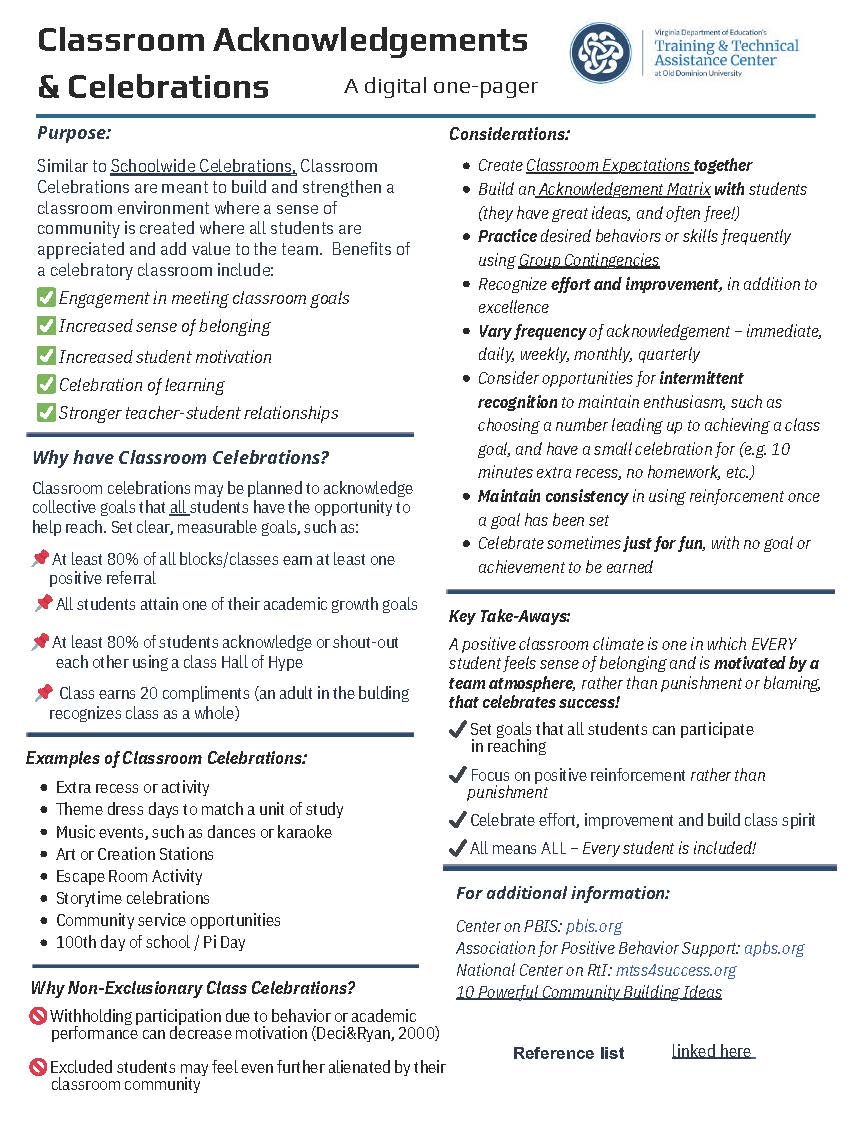
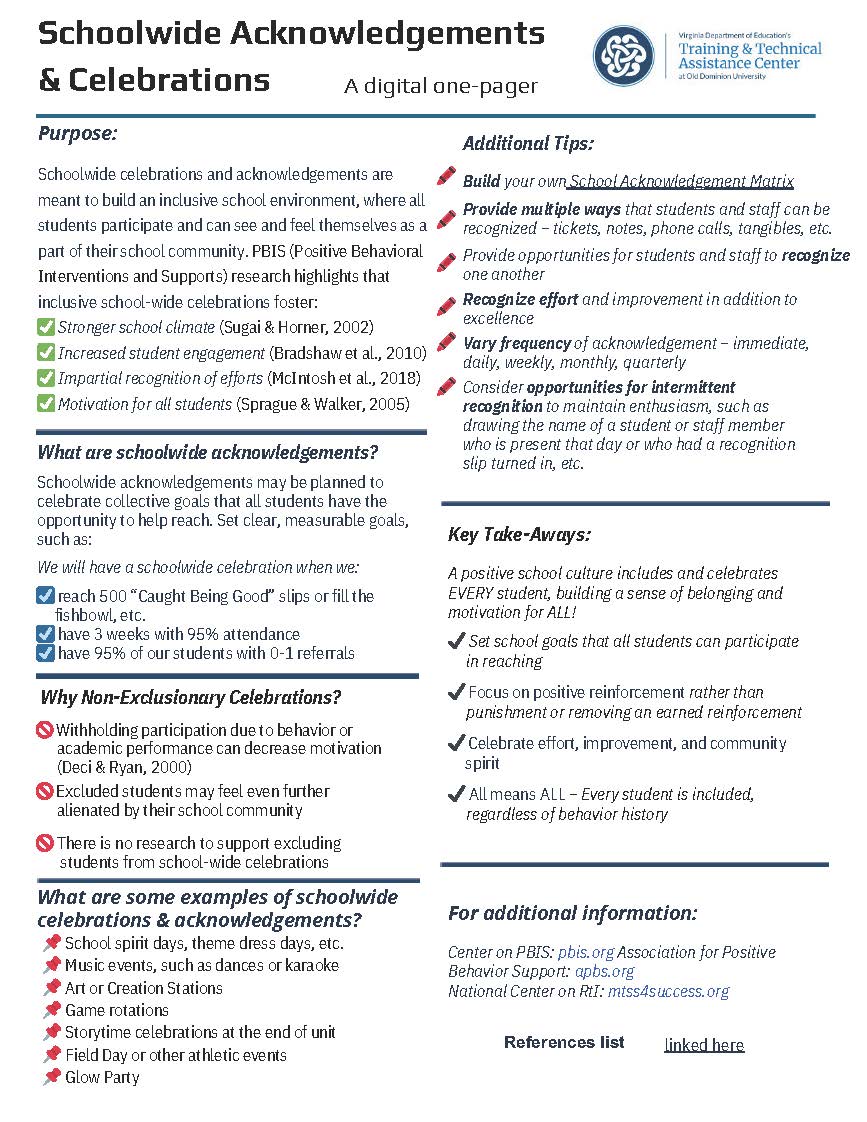
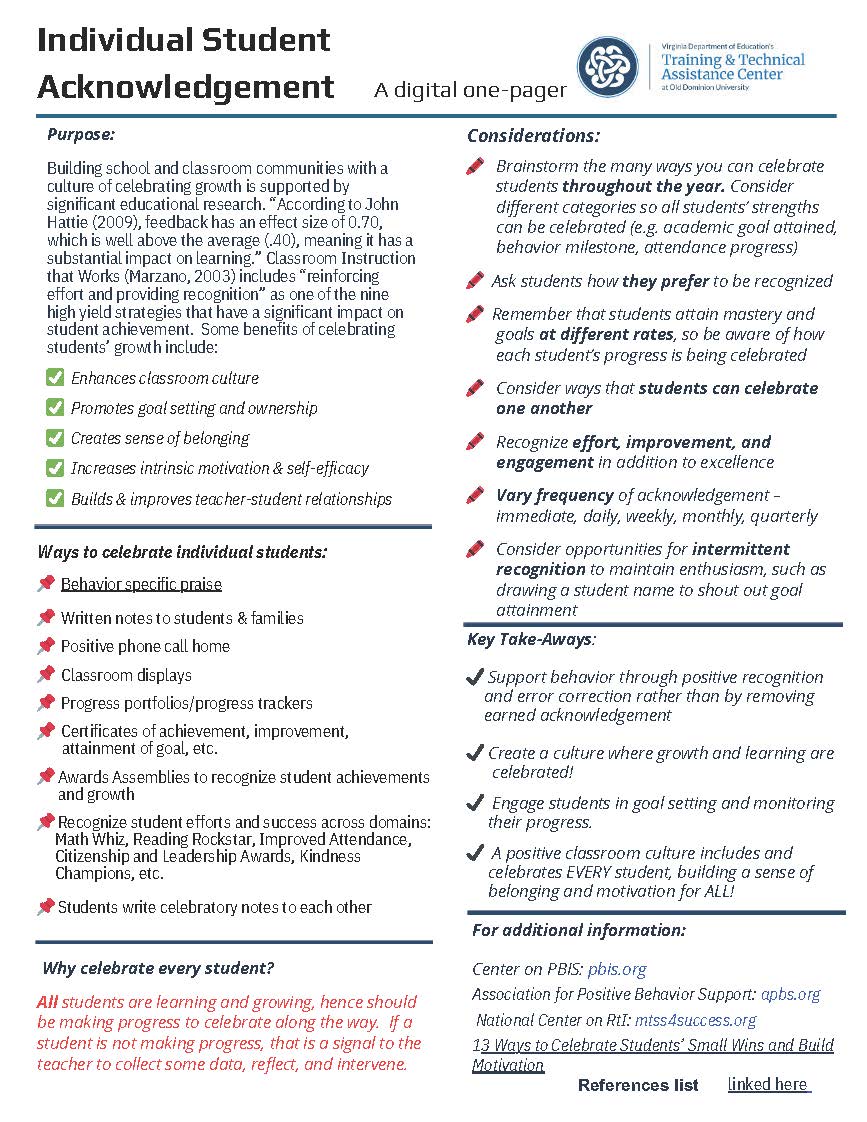
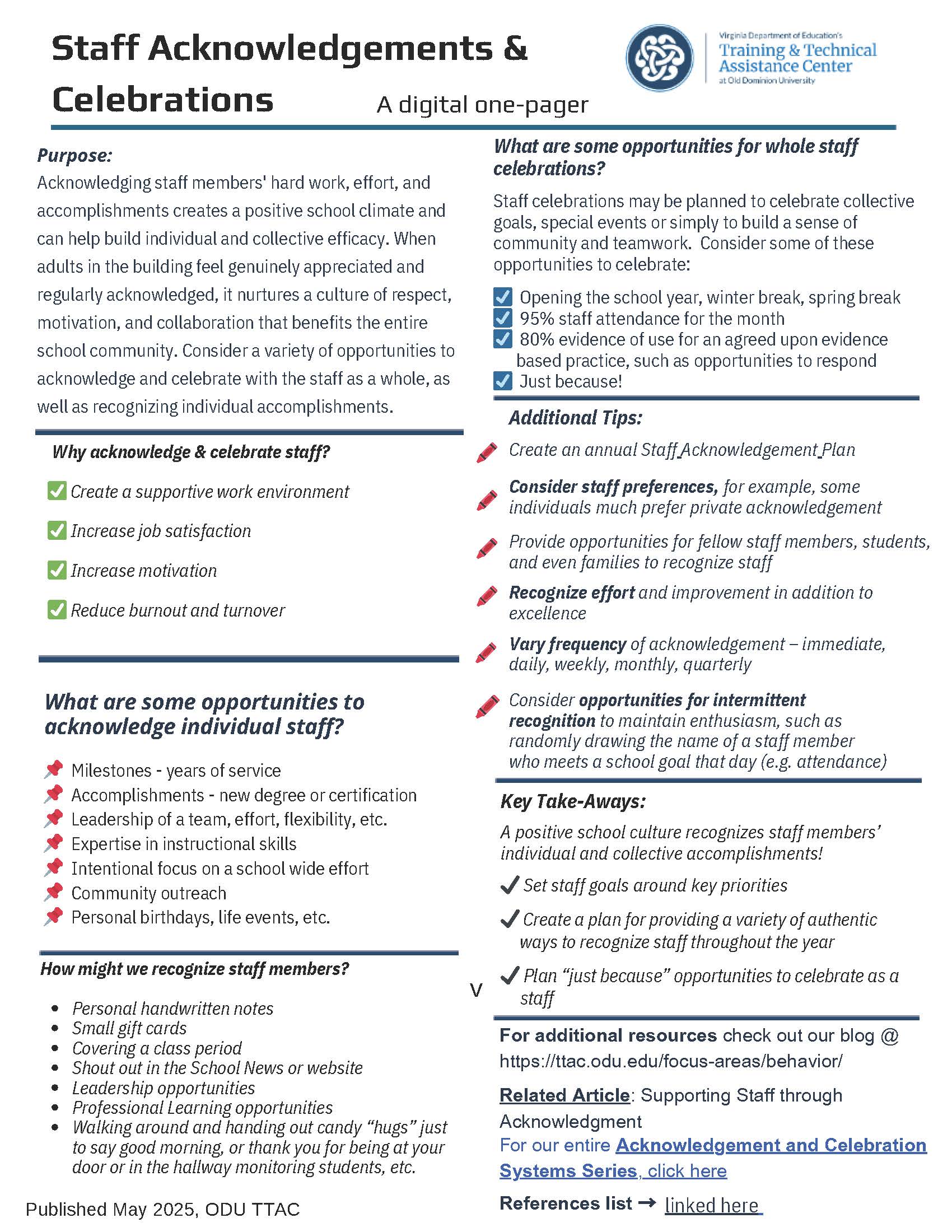
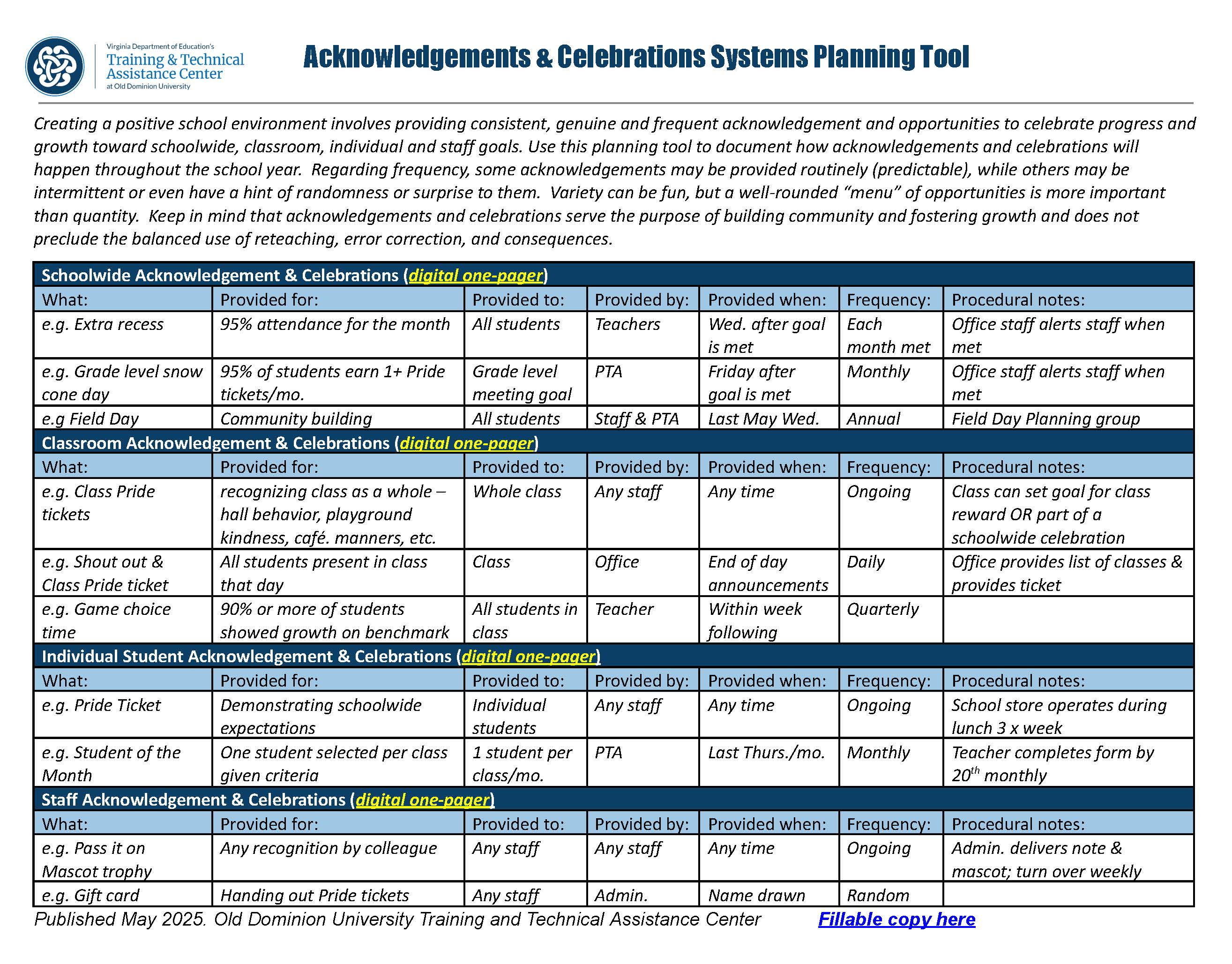
Creating a culture of belonging, motivation, and shared success is strengthened through intentional acknowledgements and celebration. These 5 one-pagers highlight best practices for acknowledgement from a tiered approach — from school-wide to the classroom to individual students, and staff. Each one-pager shares a resource tool which highlights the power of recognizing effort and achievement as a strategy to strengthen relationships, reinforce expectations, and build positive momentum. Learn how collective goals, student voice and inclusive recognition all play a role in shaping a thriving school culture. Whether you’re celebrating academic growth, attendance gains, or simply a job well done, the resources below can support your efforts to inspire and uplift your entire community. Each one-pager offers practical tools to make your next acknowledgement meaningful and impactful. Let’s celebrate the small wins—and the big ones—together.
High School
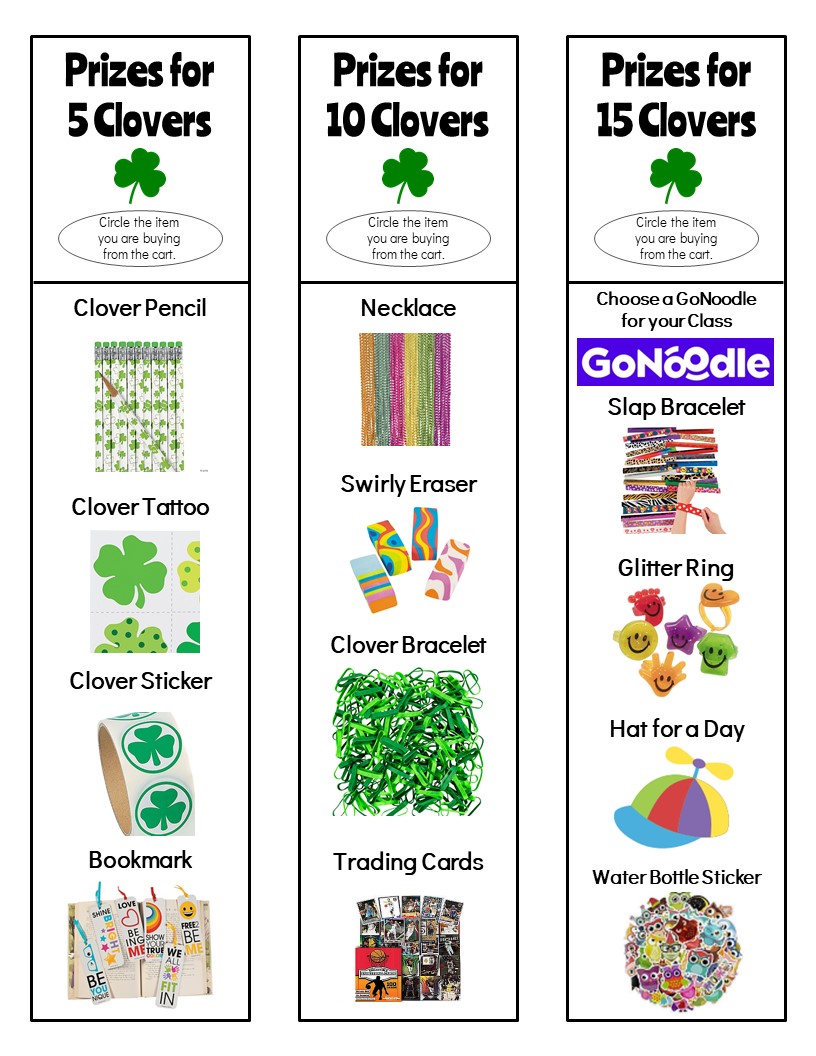
Elementary
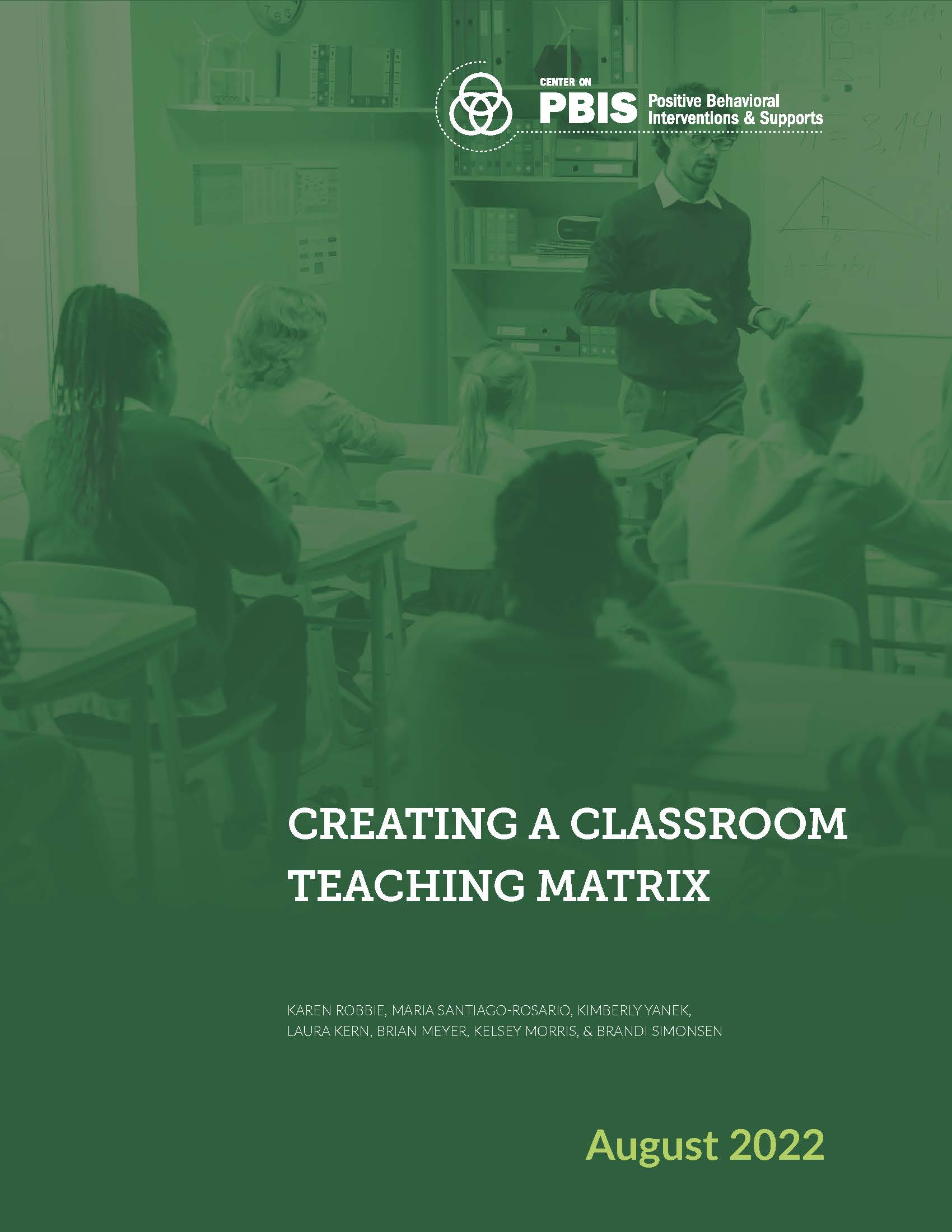
Creating a Classroom Teaching Matrix
This brief focuses on how to promote a positive teaching and learning environment by establishing positive classroom expectations, or norms, that reflect the shared values of a classroom community (i.e., educators, students, families). Specifically, this brief provides guidance for creating and using a classroom teaching matrix to explicitly identify, define, and teach (a) predictable classroom routines, (b) positive classroom expectations, and (c) critical social, emotional, and behavioral (SEB) skills.